If you're taking a GLP-1 medication like semaglutide (Wegovy) or tirzepatide (Zepbound) for weight management, you've probably noticed something striking: you feel less hungry. Your usual snacks don't appeal to you anymore. You feel satisfied with smaller portions. The weight loss that follows feels almost natural—not because you're white-knuckling through deprivation, but because your appetite has genuinely shifted. This isn't willpower. It's biology. And the research explains exactly why it happens.
Key Findings at a Glance
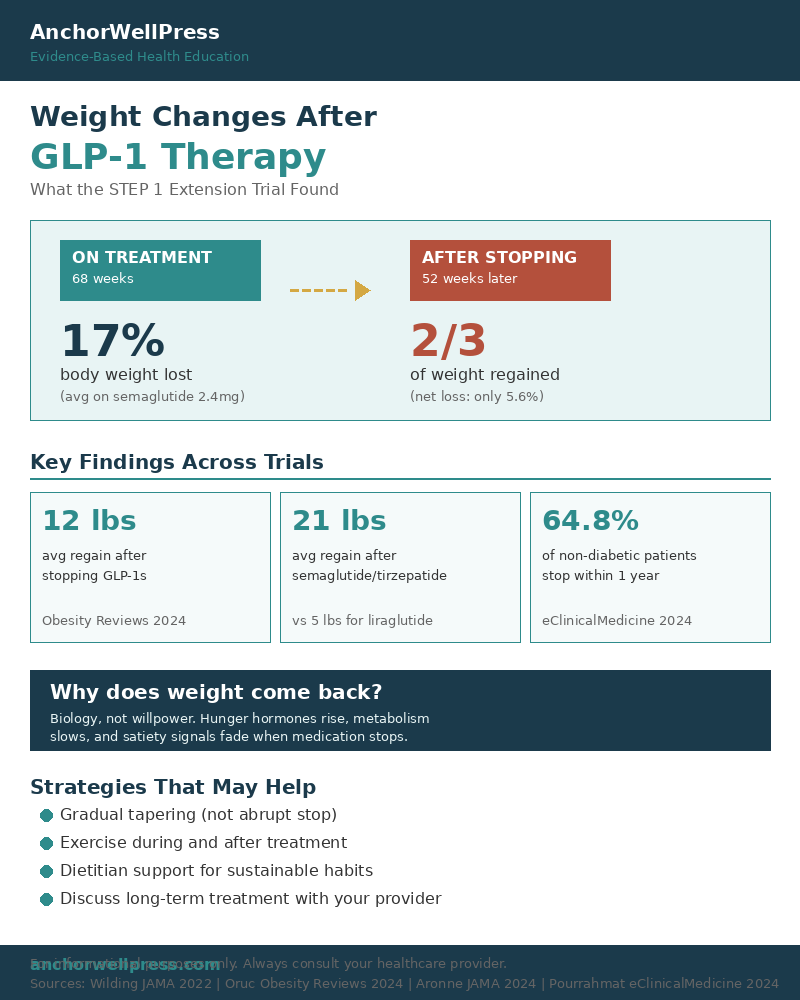
Data from STEP 1 Extension, SURMOUNT-1, and other clinical trials
How GLP-1 Medications Actually Work
GLP-1 is short for glucagon-like peptide 1, a hormone your intestines naturally produce in response to food. It's your body's appetite regulator. When you eat, your intestines release GLP-1, which tells your brain "you're satisfied now." Then you stop eating.
GLP-1 medications mimic this natural hormone, but they work harder and longer than the real thing. Here's what happens:
- In your brain: GLP-1 receptors activate appetite-suppressing signals in the hypothalamus (the part of your brain that controls hunger and fullness). At the same time, appetite-stimulating signals quiet down. The result: genuine reduced hunger, not forced restriction.
- In your gut: The medication slows how fast your stomach empties food into your small intestine. This keeps you feeling full longer. It also enhances the release of other satiety hormones—gut hormones that signal "we're satisfied" to your brain.
- Overall: Your body achieves what researchers call negative energy balance, not through suffering, but through reduced food intake. You eat less because you genuinely want to eat less.
What the Research Shows About Weight Loss
The clinical trials are remarkably consistent. GLP-1 medications produce substantial weight loss in most people—far greater than diet and exercise alone.
Semaglutide (Wegovy) — The STEP Trials
The STEP trial program followed thousands of adults with overweight or obesity over 68 weeks. Here are the results:
- Average weight loss: 14.9% to 17.4% of starting weight
- Major responders: 69–79% of people lost at least 10% of their body weight (compared to 12–27% on placebo)
- Strong responders: 51–64% lost at least 15% of their body weight
To put this in perspective: a 200-pound person losing 15% would weigh 170 pounds—a meaningful medical outcome, not a cosmetic tweak.
The longer the trial continued (STEP 5 extended to 104 weeks), the more impressive the results: participants achieved a mean weight loss of 15.2%, sustained over two years.
Tirzepatide (Zepbound) — The SURMOUNT Trials
Tirzepatide is a dual GLP-1/GIP receptor agonist—meaning it targets two appetite-control pathways instead of one. The SURMOUNT-1 trial showed even larger weight losses:
- At 10 mg dose: 21.4% average weight loss (about 49 pounds)
- At 15 mg dose: 22.5% average weight loss (about 52 pounds)
- Percent achieving 5% or more weight loss: 96% (compared to 28% on placebo)
These aren't outliers. Nearly all participants achieved meaningful weight reduction.
Both medications also improved blood pressure, cholesterol levels, and other cardiometabolic risk factors—benefits that go beyond the number on the scale.
What Happens to Your Body During Weight Loss
As you lose weight on GLP-1 therapy, several things occur:
- Your waist circumference shrinks. This is important because belly fat is metabolically active and contributes to inflammation and disease risk. Studies show significant reductions in waist circumference alongside overall weight loss.
- Your blood pressure improves. Weight loss reduces the strain on blood vessels. In the STEP trials, systolic blood pressure (the top number) improved meaningfully.
- Your blood sugar control improves. Even in people without diabetes, weight loss on GLP-1s improves insulin sensitivity and reduces the risk of developing type 2 diabetes.
- You feel physically better. Trial participants reported improvements in physical functioning and quality of life—fewer aching joints, more energy, greater mobility.
However, these changes require continued treatment. This brings us to an important question: What happens when you stop?
The Reality of Weight Regain After Stopping
This is the conversation many patients want to avoid, but the research is clear: most people regain weight after stopping GLP-1 medications.
How Much Weight Comes Back?
The data varies slightly by medication and study, but the pattern is consistent:
- Semaglutide: In the STEP-10 trial, over 40% of the lost weight returned within 28 weeks of stopping the medication. By 18 months after stopping, the average person had returned close to their pre-treatment weight.
- Tirzepatide: In the SURMOUNT-4 trial, more than 50% of weight loss was regained within 52 weeks of stopping treatment. However, one encouraging finding: 46% of participants maintained at least 10% weight loss one year after discontinuing tirzepatide.
Why Does This Happen?
Once you stop the medication, your body loses its chemical appetite suppressant. Your hunger hormones (especially ghrelin) ramp back up. Your stomach emptying returns to normal. Your brain's appetite signals go back to their baseline. And appetite resistance to leptin—a natural satiety hormone—returns.
In other words, your body is trying to restore you to your "defended weight," the weight your metabolism naturally seeks. GLP-1s work as long as you take them, but they don't permanently reprogram hunger biology.
What This Means Practically
This isn't a personal failure. It's not lack of willpower. It reflects the biology of weight regulation. Most patients who achieve significant weight loss on any medication—or through diet alone—experience some regain if they don't maintain the same effort. GLP-1s are honest about this: they're an ongoing treatment, not a cure.
Some experts compare this to other chronic conditions. A person with high blood pressure who stops blood pressure medication will see their pressure rise again. A person with high cholesterol who stops a statin will see their cholesterol climb. These aren't failures—they're how physiology works. For some people, weight management requires ongoing medication, just as heart disease management might.
Common Side Effects and What to Expect
The most frequent side effects of GLP-1 medications are gastrointestinal—nausea, vomiting, diarrhea, or constipation. About half of patients experience some nausea, and about one-third experience diarrhea, especially when starting the medication or increasing the dose.
The good news: these symptoms tend to improve with time and with slow dose escalation. Your body adapts. Most patients find that side effects decrease after a few weeks on a stable dose.
Appetite loss itself is intended, not a side effect. Some patients report feeling indifferent toward foods they previously loved. Others describe it as no longer thinking about food between meals. This is how the medication works.
Less common but important to know about: Some patients report changes in skin appearance (sometimes called "Ozempic face"), related to rapid weight loss rather than the medication itself. Discuss any concerns about physical changes with your provider.
The Bridge: Access and Prior Authorization
The weight loss data is compelling. But many patients discover that accessing these medications requires approval from their insurance company—a process called prior authorization. Some insurers require evidence that you've tried other weight loss approaches first. Others limit how long they'll cover the medication. Still others don't cover it at all for weight loss (though they may cover it for diabetes).
This creates a frustrating gap: the medication works. The research is solid. But getting access can feel like navigating a maze.
Getting Access to GLP-1 Therapy
Insurance coverage for GLP-1 medications often requires prior authorization. Our GLP-1 Navigator helps you understand your coverage, and our PA Toolkit walks you through exactly how to build a strong request that insurers take seriously.
Explore the GLP-1 NavigatorKey Takeaways
- GLP-1 medications work by reducing your genuine appetite through real changes in brain and gut hormones
- Weight loss in trials averages 15–22%, with most patients achieving at least 10% weight loss
- These medications improve not just weight, but blood pressure, cholesterol, and blood sugar control
- Weight regain after stopping is common but not universal—some patients maintain substantial weight loss long-term
- Side effects are usually mild and improve over time
- Access requires prior authorization for most insurance plans
- Long-term weight management with these medications is similar to long-term management of other chronic conditions: it requires ongoing treatment
Taking Next Steps
If you're considering GLP-1 therapy, discuss these outcomes with your healthcare provider. If you're already on one of these medications, understanding how they work—and what the research actually shows—can help you make informed decisions about your treatment.
If you're working on getting approval for a GLP-1 medication, our tools are here to help. The GLP-1 Navigator can help you understand your coverage and prepare for conversations with your insurance company. And if you're building your case for approval, our PA Toolkit walks you through exactly what insurers look for in a prior authorization request.
Build Your Strongest Prior Authorization Request
Don't guess what your insurance company wants to see. Our PA Toolkit provides the exact framework insurers use to evaluate prior authorization requests—so you can present your case clearly and increase your chances of approval.
Get the PA ToolkitQuick Reference: GLP-1 Facts at a Glance
- Average weight loss: 15–22% of body weight in clinical trials
- Most common side effects: mild nausea and GI symptoms, usually improve with time
- Benefits beyond weight: improved blood pressure, cholesterol, blood sugar control
- After stopping: most people regain 40–50% of lost weight within a year
- Long-term use: these medications work as ongoing treatment, similar to blood pressure or cholesterol management
- Insurance access: often requires prior authorization; coverage varies by plan
Save our GLP-1 infographics on Pinterest for quick reference.
Sources
GLP-1 receptor agonist mechanisms: PMC NIH, PubMed Central, ScienceDirect. STEP trials: Nature Medicine, JAMA (semaglutide efficacy and maintenance). SURMOUNT trials: New England Journal of Medicine, PMC NIH (tirzepatide efficacy in obesity). Weight regain: eClinicalMedicine (Lancet), EPIC Research, PMC NIH (meta-analyses of GLP-1 discontinuation). Side effects and safety: Cleveland Clinic, BrainFacts, AJMC (FDA approvals and clinical data).